

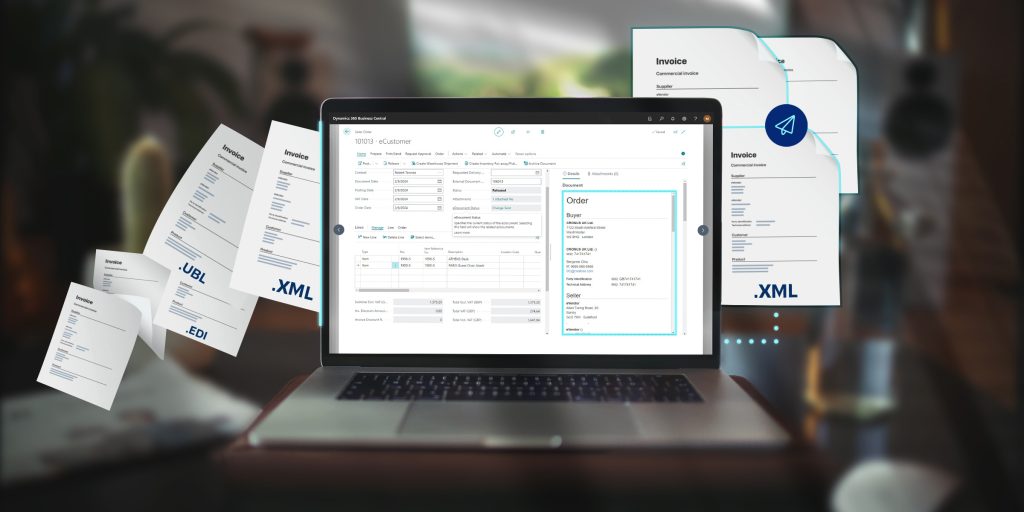
Selecting the right ERP system is a pivotal decision that can shape your business’s efficiency, scalability, and long-term growth. Among the leading choices available to businesses today are Microsoft Dynamics 365 Business Central and Odoo. While both platforms aim to streamline operations and centralise business processes, they cater to different needs and priorities. In this blog, we’ll compare the two to help you determine which solution best aligns with your organisation’s goals.
Overview: Microsoft Dynamics 365 Business Central vs. Odoo
Microsoft Dynamics 365 Business Central is an all-in-one business management solution tailored for small to medium-sized enterprises (SMEs). It integrates natively within the Microsoft ecosystem, offering capabilities across finance, supply chain, sales, and customer service. With a modern interface and seamless integration with tools like Outlook and Excel, it’s a strong option for businesses looking to digitise and streamline operations.
Odoo, on the other hand, is a modular, open-source ERP platform offering both a free Community version and a paid Enterprise edition. It provides a wide array of applications covering functions such as accounting, CRM, inventory, and e-commerce. Its high degree of customisability makes it ideal for businesses with unique or complex requirements.
Key Comparison Areas
1. Ease of Use and User Experience
- Business Central: Offers a clean, intuitive interface that aligns with familiar Microsoft 365 tools like Outlook and Teams. This reduces the learning curve and enhances adoption, even for users with limited technical skills.
- Odoo: Offers powerful functionality but a less consistent user experience. As different modules are developed by various teams, interfaces can vary, requiring users to adapt across modules.
🏆 Winner: Business Central – Thanks to its consistent interface and seamless integration with Microsoft apps.
2. Features and Functionality
- Business Central: Covers core business processes including finance, inventory, project management, and sales. It’s modular and integrates directly with Power BI for robust analytics and reporting.
- Odoo: Extremely comprehensive, Odoo supports nearly all business functions, from basic bookkeeping to manufacturing and e-commerce. The Community version covers essentials, while the Enterprise edition unlocks more advanced capabilities.
Winner: Tie – Odoo offers broader out-of-the-box functionality, but Business Central’s integration and usability offer equal value for SMEs.
3. Customisation and Flexibility
- Business Central: Supports customisation through Microsoft’s Power Platform, allowing users to automate workflows and build apps with low-code tools. Its extension-based model ensures smooth updates.
- Odoo: Exceptionally flexible due to its open-source foundation. Businesses can modify nearly every aspect, though this typically demands developer involvement and can complicate updates.
🏆 Winner: Business Central – Offers powerful yet accessible customisation with easier maintenance.
4. Integration Capabilities
- Business Central: Natively integrates with Microsoft tools like Excel, Power BI, Teams, and Azure, enabling smooth data flow and operational efficiency.
- Odoo: Offers integrations via APIs and third-party tools, but connections often require additional development and may lack the robustness of native integrations.
🏆 Winner: Business Central – Excels with built-in Microsoft ecosystem integrations.
Pricing and Total Cost of Ownership
- Business Central: Pricing is clear and predictable — starting at $70/user/month for the Essential plan, which provides all the functionality excluding Manufacturing. Costs include hosting, updates, and support.
- Odoo: While the Community version is free, Enterprise pricing starts at around $31/user/month. However, businesses often incur extra costs for hosting, implementation, customisation, and support.
🏆 Winner: Business Central – Offers greater cost predictability and better value over time for SMEs.
6. Support and Reliability
- Business Central: Backed by Microsoft, it provides 24/7 technical support, SLAs, and enterprise-grade infrastructure, ensuring reliability and ongoing innovation.
- Odoo: Support quality depends on edition and implementation partner. The Community version lacks official support, while Enterprise customers receive varying levels of assistance.
🏆 Winner: Business Central – Superior support and reliability, backed by Microsoft’s global infrastructure.
7. Scalability
- Business Central: Built to scale with growing businesses. Its cloud-native architecture supports automatic scaling, multi-currency, and multi-language operations.
- Odoo: Also highly scalable, especially for businesses with complex or evolving needs. However, scaling may involve more planning and technical resources.
🤝 Winner: Tie – Both platforms scale well, but Business Central’s managed cloud makes it simpler for most
Conclusion
Both Microsoft Dynamics 365 Business Central and Odoo are strong ERP contenders, each with unique strengths:
- Choose Business Central if you value ease of use, tight Microsoft integration, predictable pricing, and reliable support.
- Choose Odoo if your business requires maximum customisability, a broader feature set out-of-the-box, or if you prefer an open-source approach.
The best choice depends on your organisation’s size, technical capabilities, and strategic goals.